The quiet revival of Europe’s night trains
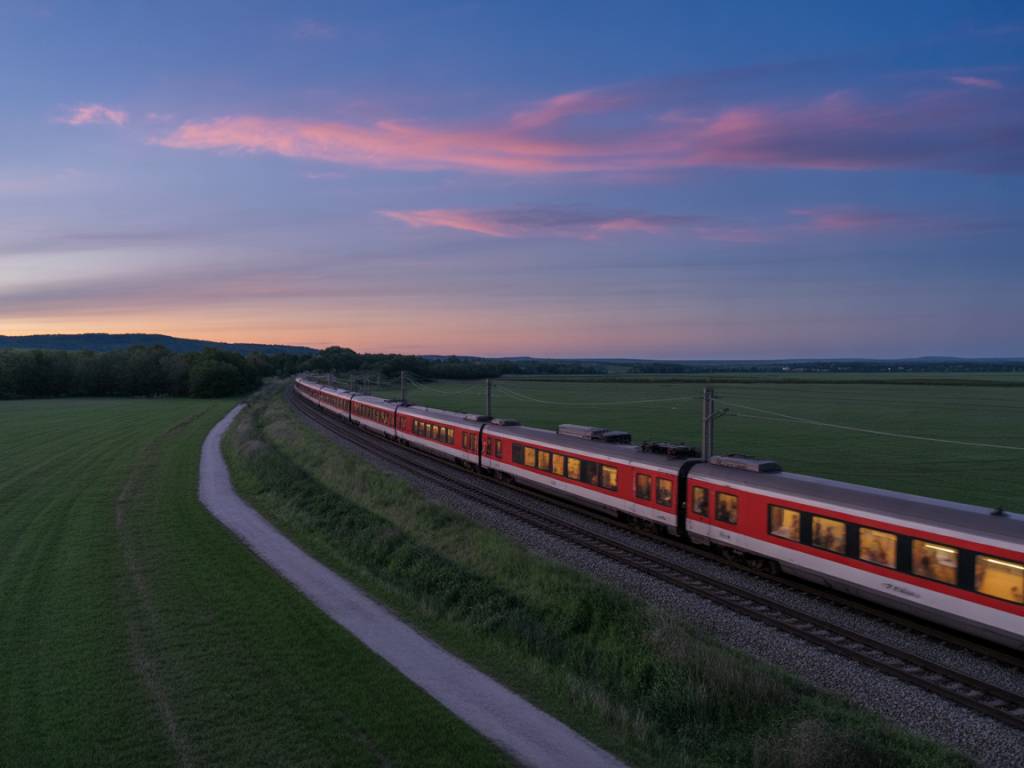
Across Europe, the slow rhythm of overnight train travel is returning after decades of decline. Once considered an outdated relic of 20th‑century mobility, night trains are now being rediscovered by a new generation of climate‑conscious travellers who are rethinking what it means to move across the continent.
As aviation faces growing scrutiny for its carbon footprint, rail operators, start‑ups and public authorities are investing in sleeper services that link major cities while passengers sleep. This shift is not only about transport; it is reshaping how people plan holidays, experience distance and understand the environmental cost of tourism.
Why night trains matter for low‑carbon tourism
From a climate perspective, the renewed interest in night trains is not accidental. Rail travel is among the lowest‑carbon ways to move long distances, especially when powered by Europe’s increasingly decarbonised electricity grids. According to European Environment Agency estimates, travelling by train can emit up to 90% less CO₂ per passenger‑kilometre than flying on the same route.
Night trains intensify this advantage by combining transport and accommodation into a single, efficient system. Instead of a short‑haul flight, airport transfers and a hotel night, one ticket covers the journey and a place to sleep. For the traveller, this means:
- Fewer emissions per trip compared with air travel
- No additional hotel room needed for the travel night
- Less time lost in airports and security checks
- Arrivals in city centres rather than out‑of‑town terminals
For tourists trying to reduce the climate impact of their holidays, these factors make night trains an increasingly convincing alternative to budget flights, especially on distances of roughly 600 to 1,500 kilometres.
From decline to renaissance: a short history of Europe’s sleeper trains
Overnight trains once formed the backbone of long‑distance rail in Europe. The classic Trans Europ Express services and the later EuroNight network connected major capitals and holiday destinations from the 1960s to the early 2000s. However, several forces led to their decline:
- The rise of low‑cost airlines driving down ticket prices
- Liberalisation of the aviation market and expanding route networks
- A shift in rail investment towards high‑speed daytime services
- Complex cross‑border coordination between national rail operators
By the mid‑2010s, many iconic sleeper routes had disappeared. Yet growing concern over aviation emissions, combined with changing attitudes towards time and comfort, opened a space for their return. The turning point came when a mix of state railways and newcomers decided that the night train still had a role to play in a climate‑constrained world.
New routes, new actors: what is running today?
The night‑train map of Europe is expanding again. Some of the most visible players are:
- ÖBB Nightjet (Austria’s Federal Railways) – Now the largest night‑train operator in Western Europe, running services such as Vienna–Paris, Zurich–Berlin, and Brussels–Vienna. Nightjet has invested in new rolling stock with modern sleeping pods and compartments.
- European Sleeper – A crowdfunded start‑up connecting Brussels, Amsterdam and Berlin, with plans to extend further to Prague and other destinations. It positions itself explicitly as a climate‑friendly alternative to flying.
- RegioJet and other private operators – Czech‑based RegioJet operates seasonal night trains to coastal destinations, for example from Central Europe to Croatia, catering heavily to holidaymakers.
- National operators reviving routes – Sweden’s SJ has reintroduced long‑distance night services such as Stockholm–Berlin (via ferry), while France has reinstated some domestic routes, including Paris–Nice and Paris–Briançon.
These services are far from perfect in coverage, but the overall trend is clear: night trains are no longer a niche curiosity. They are becoming a strategic element of Europe’s attempt to decarbonise tourism and short‑haul travel.
Rethinking the journey: the philosophy of slow travel
Night trains intersect directly with the growing interest in “slow travel” – a movement that values time, immersion and reduced environmental impact over speed and checklist tourism. Instead of treating travel as a necessary inconvenience between two points, slow travel emphasises the journey as part of the experience.
On an overnight train, this philosophy is almost built into the timetable:
- You embark in the evening, often after a final walk or dinner in the departure city.
- You settle into a cabin, couchette or reclining seat, sharing space with other travellers.
- You wake up hours later in a new city, sometimes even a new climate or culture.
The process is less about instant arrival and more about adjusting gradually to distance. This rhythm tends to influence the rest of the trip: travellers often stay longer in each place, choose fewer destinations and pay more attention to local contexts. All of these behaviours align naturally with lower‑carbon tourism, which favours extended stays and reduced hopping between cities or countries.
Comfort, privacy and the changing onboard experience
A key factor in the revival of night trains is the improvement in comfort and design. The classic image of cramped compartments and rattling carriages is gradually giving way to more contemporary models.
On many routes, passengers can now choose between several comfort levels:
- Seats – The most affordable option, often with limited recline and shared carriages, suitable for budget travellers or shorter routes.
- Couchettes – Shared compartments (typically 4–6 berths) with basic bedding, used by families, groups or solo travellers willing to share.
- Sleeping cabins – More private compartments for one to three passengers, sometimes with en‑suite bathrooms, offering hotel‑like comfort.
Newer trains are attempting to address criticisms about privacy and rest. Some Nightjet carriages, for example, introduce compact “mini cabins” with sliding doors, reading lights, plug sockets and integrated luggage space – a hybrid between a couchette and a private pod. For many travellers, especially those who might normally fly, these upgrades make overnight rail not just acceptable but genuinely attractive.
Practical barriers: booking, price and coordination
Despite their potential, night trains are not yet a seamless option across Europe. Several structural barriers still discourage wider adoption:
- Booking complexity – Cross‑border ticketing remains fragmented. Travellers often need to search multiple websites or rely on specialist booking platforms to find suitable routes and fares.
- Price competition with aviation – While rail is often cheaper than flying when booked far in advance, last‑minute tickets can be expensive, especially for private cabins. Low‑cost airlines still undercut many routes when price is the sole criterion.
- Limited capacity and routes – Night trains are still concentrated along certain corridors, leaving large parts of Europe underserved or without direct overnight connections.
- Rolling stock availability – Years of underinvestment mean that operators struggle to assemble enough suitable carriages, slowing the expansion of services.
Addressing these issues will require both regulatory intervention and public financing, particularly if European governments are serious about shifting a portion of short‑haul travel from air to rail.
How travellers can integrate night trains into their holidays
For individual travellers motivated by climate concerns, night trains can become the backbone of a different way to holiday in Europe. Several practical strategies can make this easier:
- Plan around rail corridors – Instead of picking any two cities and then searching for a flight, start by looking at existing night‑train routes and build your itinerary around them.
- Book early for better fares – As with many trains and flights, advance booking tends to secure lower prices and more choice of cabin types.
- Travel light but prepared – A small, durable carry‑on suitcase or backpack, a reusable water bottle, and compact sleep accessories (earplugs, eye mask, light travel blanket) can greatly improve comfort.
- Use rail passes strategically – Products such as Interrail and Eurail passes can help combine several night and day trains into one longer, flexible journey across multiple countries.
- Combine with local, low‑impact stays – Pair the train journey with accommodation that emphasises energy efficiency, local food and longer stays, further reducing the overall footprint of the trip.
These adjustments not only lower emissions; they often create richer experiences, with more room for unexpected encounters and less stress than tightly packed flight‑based itineraries.
Associated products for more sustainable rail journeys
As more people adopt night trains, a small ecosystem of products is emerging to support low‑carbon travel. Travellers looking to equip themselves with durable, climate‑friendly gear tend to prioritise:
- Long‑lasting luggage made from recycled or recyclable materials, designed for frequent train use and easy storage in cabins and overhead racks.
- Compact travel pillows and blankets that improve sleep quality while avoiding the disposable items sometimes offered onboard.
- Reusable containers – water bottles, coffee flasks and lunch boxes that reduce single‑use plastics when buying food and drinks at stations or onboard.
- Digital tools and apps to manage tickets, track trains in real time and calculate the emissions saved compared with flying.
Selecting robust, repairable equipment rather than fast‑fashion travel accessories aligns well with the ethic of slow, low‑impact tourism. For many readers of sustainability‑oriented blogs and guides, these purchases are seen less as gadgets and more as long‑term investments in a different way of moving.
Policy shifts and the role of public support
The expansion of night trains is not solely a market story. Public policy plays a decisive role in whether these services will become a central pillar of European tourism or remain a patchwork of isolated routes.
Several policy levers are already under discussion or implementation:
- Rebalancing taxes and fees between aviation and rail, for example through kerosene taxation or reduced track access charges for night trains.
- Supporting cross‑border coordination so that timetables, rolling stock standards and ticketing systems work across national boundaries.
- Funding rolling‑stock renewal to replace ageing carriages with energy‑efficient, comfortable sleeper trains.
- Integrating rail into tourism strategies, promoting overnight services in national and regional campaigns aimed at domestic and international visitors.
These measures can help shift the competitive balance away from short‑haul flights and towards modes that fit within Europe’s climate goals.
Night trains as a symbol of a different kind of tourism
Beyond emissions numbers and timetables, night trains tap into a broader cultural shift. For many travellers, choosing an overnight train is a way to align personal values with concrete actions: to acknowledge that the pace and patterns of travel must adapt to planetary limits, without giving up the joy of discovery.
As services expand and equipment modernises, night trains are moving from nostalgia to practicality. They offer a tangible pathway towards low‑carbon tourism in Europe, one that asks us to rethink speed, distance and comfort. For those willing to adjust how they move, the sleeper carriage is no longer a compromise; it is increasingly becoming the preferred way to cross a continent in the dark, waking up somewhere new with a lighter footprint on the places we choose to visit.