


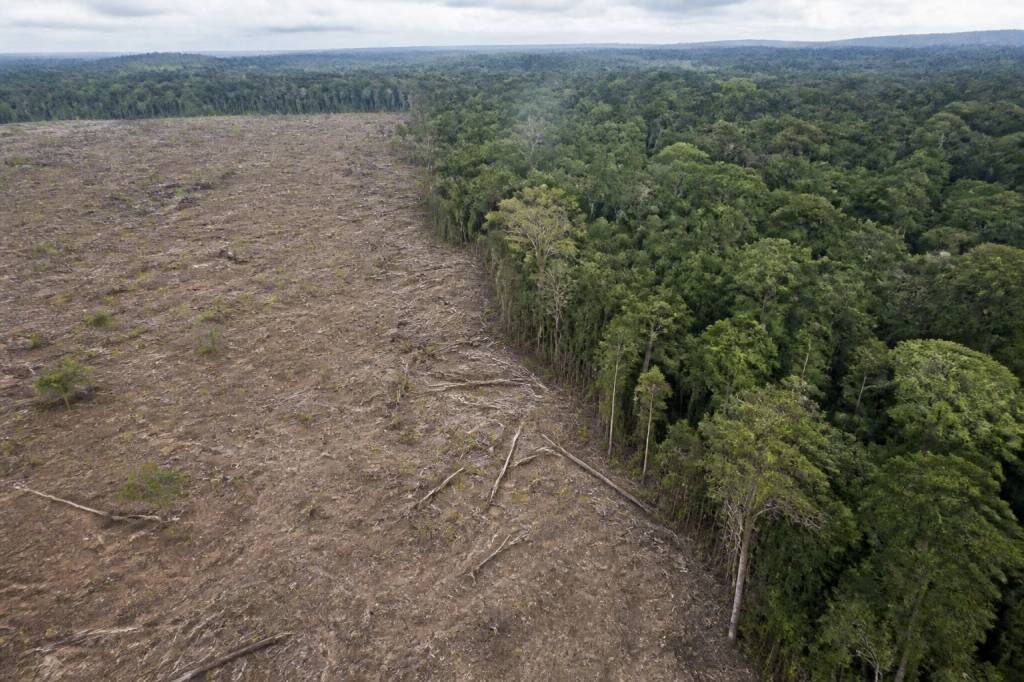
What deforestation really means
Deforestation is the large-scale removal of trees from forests and their permanent or long-term conversion to other land uses, such as agriculture, cattle ranching, mining, roads, or urban expansion. That “permanent or long-term” part matters. Forests can be damaged by storms, fires, or logging and still recover. Deforestation is different: the forest ecosystem is replaced by something else, and the recovery path becomes much harder, slower, or impossible.
It is tempting to think of deforestation as a problem happening far away, in a place with endless trees and no immediate connection to daily life. In reality, it is tied to the food on our plates, the products in our homes, and the stability of the climate system we all depend on. If forests are the planet’s lungs, rivers, and wildlife corridors rolled into one, then deforestation is not a local issue. It is a global one.
How much forest is being lost?
The numbers are sobering. According to the Food and Agriculture Organization, the world still loses millions of hectares of forest every year. While the pace varies by region, the overall trend remains deeply concerning. Tropical forests, which store enormous amounts of carbon and host the highest levels of biodiversity, are among the most affected.
Most of this loss is driven by land-use change rather than “accidental” tree removal. In many regions, forests are cleared to make room for soy production, palm oil plantations, cattle grazing, timber extraction, or infrastructure. Sometimes the first cut is followed by a chain reaction: logging roads open access, settlers arrive, fires spread more easily, and the forest begins to fragment. Once that happens, the ecosystem starts to unravel faster than many people expect.
And yes, forests can grow back in some cases. But a replanted landscape is not the same as a mature forest that has developed over decades or centuries. You cannot just swap an ancient rainforest for a few rows of saplings and call it even. Nature is good, but it is not that easygoing.
Why forests matter beyond the trees
Forests do much more than produce wood. They regulate water cycles, stabilize soils, store carbon, shelter wildlife, and support millions of people who depend on them for food, medicine, fuel, and livelihoods. A healthy forest is a living system, not a collection of trunks.
One useful way to think about forests is as infrastructure. They quietly perform services that would be expensive, or impossible, to replace:
- They absorb carbon dioxide from the atmosphere and store it in biomass and soils.
- They help generate rainfall by releasing moisture into the air through evapotranspiration.
- They reduce erosion by holding soil in place with roots and leaf litter.
- They filter water and help maintain stream flow during dry periods.
- They provide habitat for a vast range of species, from insects to large mammals.
When forests disappear, these functions weaken or collapse. That is why deforestation is not only a biodiversity issue. It is also a water issue, a food security issue, and a public health issue. In many places, it even becomes a disaster-risk issue, because bare or degraded land is more vulnerable to floods, landslides, and drought.
The impact on wildlife: fewer trees, fewer species
Forests are home to most of the world’s terrestrial biodiversity. They provide shelter, breeding grounds, food sources, and migration routes. When forests are cleared or fragmented, wildlife loses more than a place to live. It loses the connections that allow populations to survive.
Fragmentation is especially damaging. Even if some trees remain, a forest broken into isolated patches becomes harder for animals to cross. Species that need large territories, specific food sources, or stable microclimates are often the first to decline. Smaller fragments can become ecological traps: they look usable from a distance, but they do not support long-term survival.
Consider a few examples. Orangutans in Southeast Asia are highly affected by the loss of tropical forest for palm oil and logging. Jaguars in the Amazon need vast, connected habitats to move and hunt. In Africa, forest elephants play a crucial role in seed dispersal, which means their decline affects the forest itself, not just the animals. Birds, amphibians, insects, and countless lesser-known species are also impacted, even when their names never make the headlines.
One surprising fact is that biodiversity loss is not only about rare or iconic species. Many common species also decline, and that matters because ecosystems depend on interactions: pollination, seed dispersal, decomposition, and pest control. Remove enough pieces of the system, and the whole structure starts to fail.
How deforestation changes the climate
Forests are powerful carbon sinks. They absorb carbon dioxide as they grow and store it in wood, leaves, roots, and soils. When forests are cut, burned, or degraded, that stored carbon can be released back into the atmosphere. In climate terms, this is a double hit: we lose a carbon sink and add emissions at the same time.
This is why forest loss is a major contributor to global greenhouse gas emissions. In tropical regions especially, deforestation and forest degradation can release huge amounts of carbon. Fires used to clear land often make the problem worse, sending even more emissions into the air and destroying the soil’s ability to recover quickly.
But the climate impact does not stop with carbon. Forests also shape local and regional weather patterns. They recycle moisture, influence cloud formation, and help maintain humidity. Large-scale forest loss can reduce rainfall in surrounding areas and lengthen dry seasons. In other words, removing forests can make the land hotter and drier, which then makes forests and farms more vulnerable to fire and drought. That feedback loop is one of the reasons forest loss is so dangerous.
There is also a less visible but critical effect: forests help buffer climate extremes. They cool the landscape through shade and evaporation. Without them, surface temperatures rise, and nearby communities can face more heat stress. So when we talk about climate adaptation, forests are not a bonus feature. They are part of the solution.
What drives deforestation?
There is no single cause. Deforestation is usually the result of economic pressures, weak governance, and global demand for land and commodities. Understanding those drivers is essential if we want real solutions instead of symbolic tree-planting campaigns that look good in a photo but do not address the root problem.
The main drivers include:
- Agricultural expansion: Forests are cleared for crops such as soy, cocoa, and palm oil, or for cattle ranching.
- Logging: Legal and illegal logging can degrade forests and open access to deeper clearing.
- Infrastructure: Roads, dams, and settlements fragment forests and encourage further land conversion.
- Mining and extraction: Mineral extraction can destroy habitat directly and create pollution that affects surrounding ecosystems.
- Fire: Some fires are intentional land-clearing tools; others escape control and spread into degraded areas.
In many cases, the forests themselves are not seen as the “product.” The land is. That shift in value is why forests can disappear rapidly once an area is linked to global supply chains. A bar of chocolate, a burger, or a bottle of cosmetics may have a hidden land footprint if the supply chain is not carefully managed.
The human cost is real too
Deforestation is often discussed as an environmental issue, but it also affects people directly. Indigenous communities and local populations frequently rely on forests for food, medicine, cultural practices, and income. When forests are cleared, these communities may lose access to resources they have managed for generations.
There is also a justice dimension. The people who contribute least to global emissions are often among those most affected by forest loss and the climate impacts it amplifies. That includes rural communities facing drought or flooding, as well as Indigenous peoples defending their territories against illegal logging or land grabs.
Some of the most effective forest protection efforts happen where local communities have secure land rights. Why? Because people who live in and depend on forests often have the strongest incentive to manage them sustainably. Protecting forests is not just about fencing people out. It is about supporting the people already doing the work of stewardship.
What happens after the trees are gone?
A cleared forest rarely remains an empty patch of land for long. What follows can include soil degradation, water stress, invasive species, and a decline in local livelihoods. Once the canopy is removed, sunlight hits the ground directly, drying out vegetation and increasing erosion. Nutrients wash away, and the land becomes less productive.
In tropical forests, soils are often surprisingly poor despite the lush vegetation above them. The ecosystem works because nutrients cycle rapidly through plants and organic matter. Remove the forest, and that cycle breaks. Farms established on freshly cleared forest land may produce well for a short time, then decline as the soil is exhausted.
Fire risk also rises. Forest edges and degraded areas are much more flammable than intact forest. That means deforestation can make future fires more likely, especially during dry seasons. The forest edge becomes a vulnerability zone, and every new road or clearing can widen it.
Can forests recover?
Yes, but not automatically, and not always to their original state. Natural regeneration can be surprisingly effective in some landscapes, especially where seed sources remain nearby and disturbance pressure is low. Assisted regeneration, reforestation, and agroforestry can also help restore ecosystem functions.
Still, recovery is not the same as replacement. A restored forest may eventually provide habitat and carbon storage, but it often takes a long time to regain the complexity of an old-growth ecosystem. That is why avoiding deforestation in the first place is far more effective than trying to repair the damage later.
Restoration works best when it is strategic. The goal is not simply “plant more trees,” but “bring back the right trees, in the right place, for the right reasons.” Native species, landscape connectivity, soil health, and community involvement all matter. A monoculture plantation may look green from the road, but it does not deliver the same benefits as a diverse forest.
What can actually help?
There are concrete actions that make a difference, and they span policy, business, and individual choices. Forest protection works best when these levels reinforce one another.
- Protect intact forests: Preventing loss is more effective than trying to restore forests after clearance.
- Strengthen land rights: Supporting Indigenous and community land tenure often leads to better forest outcomes.
- Improve supply chain transparency: Companies can trace commodities like beef, soy, palm oil, and timber to reduce forest risk.
- Restore degraded land: Prioritize natural regeneration and native-species restoration where possible.
- Reduce demand for deforestation-linked products: Consumer choices matter, especially when they are combined with policy pressure.
- Support forest-friendly policy: Strong enforcement, anti-corruption measures, and incentives for sustainable land use are essential.
Individuals are not powerless here, even if the scale of the issue can feel overwhelming. Choosing products with credible sustainability commitments, reducing food waste, supporting organizations that defend forests, and voting for climate and land-use policies all add up. No single action solves deforestation, but doing nothing is not exactly a strategy either.
Why this issue deserves attention now
Deforestation is one of those problems where the damage is immediate, but the consequences unfold over years. A forest can be cleared in days. The effects on rainfall, wildlife populations, soil fertility, and climate stability can linger for decades. That imbalance between speed and recovery is part of what makes the issue so urgent.
There is also a timing problem. The world is trying to cut emissions, protect biodiversity, and adapt to climate change at the same time. Forests sit at the intersection of all three goals. If we lose them, we do not just lose trees. We lose one of the most effective natural allies we have.
The good news is that forests can still be protected, restored, and managed more sustainably when governments, businesses, and communities align around clear goals. The bad news is that delay makes every solution harder. Forests are resilient, but they are not infinite. And the climate system is not waiting politely while we debate land-use planning.
What to remember
Deforestation is not just about trees disappearing from a map. It reshapes ecosystems, pushes wildlife toward decline, releases carbon into the atmosphere, disrupts rainfall, and weakens the resilience of communities that depend on forests. It is a land-use issue, a climate issue, a biodiversity issue, and a human issue all at once.
If there is one key fact to keep in mind, it is this: intact forests are far more valuable standing than cleared and replaced. They support wildlife, stabilize climate, and sustain people in ways that are difficult to quantify but impossible to ignore. The more we understand that, the better equipped we are to defend them.