


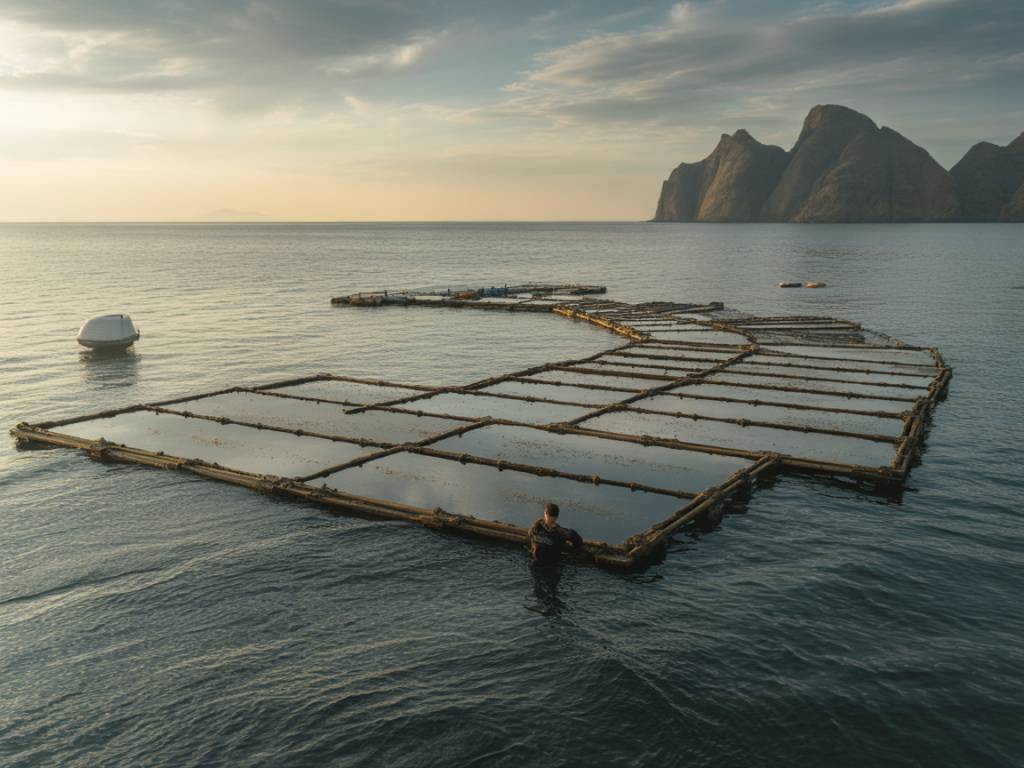
Along coastlines around the world, a quiet transformation is taking place. Instead of trawlers scraping the seafloor or fish packed into high-density pens, long ropes of seaweed sway with the tide and clusters of oysters, mussels, and clams filter the water. This is regenerative ocean farming, a form of aquaculture designed not only to produce food, but to heal marine ecosystems, store carbon, and offer coastal communities new economic opportunities.
What is regenerative ocean farming?
Regenerative ocean farming is a low-impact form of aquaculture that typically combines seaweed (macroalgae) and shellfish (bivalves such as oysters, mussels, clams, and scallops) on the same site. Unlike conventional fish farming, it does not rely on feed, antibiotics, or freshwater inputs. Instead, it harnesses natural ocean processes.
In its simplest form, a regenerative farm consists of vertical or horizontal lines anchored to the seafloor and suspended near the surface. Seaweed grows on ropes, while shellfish are cultivated in lantern nets, on lines, or on the seafloor beneath. This three-dimensional approach uses the entire water column, making production more efficient per square meter than many terrestrial farms.
The word “regenerative” is central: the goal is not just to reduce harm, but to actively improve environmental conditions over time. Well-designed farms can increase habitat complexity, attract marine life, improve water quality, and sequester carbon and nitrogen.
Why seaweed is central to the blue regeneration story
Seaweed has quickly become a symbol of the emerging “blue economy.” Fast-growing and highly adaptable, marine macroalgae require no freshwater, no fertilizers, and no arable land. They rely solely on sunlight, dissolved nutrients, and seawater. This gives seaweed some compelling environmental advantages.
From an ecological perspective, seaweed plays several key roles:
- Carbon sequestration: Seaweed absorbs carbon dioxide as it grows. Some of this carbon is stored long-term when fragments sink to deeper waters or are buried in marine sediments.
- Nutrient uptake: In nutrient-polluted coastal waters, seaweed can help reduce excess nitrogen and phosphorus, mitigating algal blooms and dead zones.
- Habitat creation: Seaweed farms create complex structures in the water column, offering shelter and feeding grounds for fish, invertebrates, and other marine life.
Economically, the versatility of seaweed is driving a wide range of new products:
- Food and ingredients: Kelp, nori, wakame, and other species are used in snacks, noodles, condiments, and umami-rich seasonings. Seaweed is naturally rich in iodine, fiber, and minerals, making it attractive for health-focused consumers.
- Plant-based alternatives: Extracts such as alginate, carrageenan, and agar are used as thickeners and gelling agents in dairy alternatives, desserts, and sauces.
- Bioplastics and packaging: Emerging companies are developing seaweed-based films, coatings, and packaging materials designed to reduce reliance on fossil-fuel plastics.
- Fertilizers and soil enhancers: Dried or liquid seaweed products are marketed to gardeners and farmers as organic soil conditioners that can improve structure and boost plant resilience.
- Cosmetics and personal care: Seaweed extracts appear in moisturizers, serums, and bath products, valued for their hydrating and antioxidant properties.
For consumers, this means seaweed is increasingly available not only in traditional Asian cuisines, but also in snack aisles, health food stores, garden centers, and eco-lifestyle shops.
Shellfish as natural water filters and climate allies
Shellfish are the other pillar of regenerative ocean farming. Oysters, mussels, clams, and scallops are filter feeders: they draw in water, capture microscopic plankton and organic particles, and then expel clarified water. In doing so, they can improve local water quality and clarity, which in turn supports seagrasses and other marine plants.
Well-managed shellfish farms can provide several environmental benefits:
- Water filtration: A single adult oyster can filter large volumes of water per day (estimates vary by species and conditions). At farm scale, this filtration can reduce turbidity and help control phytoplankton blooms.
- Habitat creation: Shellfish structures—ropes, cages, and especially reef-like formations—offer shelter for crabs, fish, and other invertebrates, increasing local biodiversity.
- Nutrient removal: As shellfish grow, they incorporate nitrogen and phosphorus into their shells and tissues. When harvested, those nutrients are removed from the marine system.
From a climate perspective, the calcium carbonate in shells also represents a stable, long-lasting mineral form of carbon. While not a complete solution to ocean acidification or climate change, large-scale shellfish farming is frequently cited as part of a broader suite of natural climate solutions in coastal zones.
Shellfish also offer a protein source with relatively low environmental impact compared with many land-based animal products. They require no feed or freshwater, produce minimal greenhouse gas emissions, and are often praised by nutritionists for their high-quality protein, omega-3 fatty acids, and micronutrients such as zinc and vitamin B12.
How regenerative ocean farms work in practice
Although configurations differ by region and species, many regenerative farms share similar design features. Lines or rafts are anchored to the seafloor, with buoys keeping them near the surface. Seeded seaweed lines hang vertically or are strung horizontally, while shellfish baskets or nets are suspended beneath, or planted on the bottom where conditions allow.
This multi-layer structure has several important characteristics:
- Three-dimensional production: Instead of occupying large horizontal areas, farms use vertical space, yielding more biomass per unit of surface ocean.
- Low capital footprint: Compared with large offshore fish cages or industrial trawlers, gear requirements are modest, making entry more accessible for small-scale fishers and coastal communities.
- Compatibility with existing uses: When carefully sited, farms can coexist with small-boat fisheries, tourism, and marine conservation areas, especially if they enhance habitat.
Because seaweed and shellfish require no external feed, the main operational inputs are labor, boats, gear maintenance, and processing infrastructure. This is one reason why regenerative models are gaining attention as a potential employment source in coastal regions hit by fish stock declines or industrial restructuring.
Environmental promises and real-world limits
The environmental narrative around regenerative ocean farming is compelling, but outcomes depend heavily on scale, design, and local conditions. There are several important considerations:
- Site selection: Farms must avoid sensitive habitats such as seagrass meadows, coral reefs, or migration corridors. Poorly sited operations can shade or smother existing ecosystems.
- Carrying capacity: Over-concentration of farms in one bay can alter ecosystem dynamics, such as plankton availability for wild species, and may create navigation conflicts.
- Genetic and ecological risks: Introducing non-native seaweed or shellfish species, or poorly managed seed stocks, can present ecological risks, from invasive species to disease spread.
- Plastic pollution: Many farms depend on synthetic ropes, nets, and floats. Without careful management and improved materials, gear loss can add to marine plastic pollution.
Researchers and practitioners are working to address these challenges, often by developing best-practice guidelines, improved licensing systems, and better monitoring. The central question is less whether regenerative ocean farming is beneficial, and more under what conditions and at what scale its benefits are maximized while harms are minimized.
From ocean to consumer: products shaping a blue lifestyle
For individuals looking to align their consumption with ocean-positive practices, the most visible entry points are products derived from regenerative farms. These increasingly span several categories.
Food and nutrition
- Edible seaweed products: Dried kelp snacks, powdered seaweed seasonings, and seaweed-infused broths or sauces are appearing in supermarkets and specialty stores. Some brands highlight traceability, specifying the farm of origin and cultivation practices.
- Shellfish from certified farms: Oysters, mussels, and clams from farms that emphasize ecosystem services and rigorous water-quality monitoring appeal to consumers wanting lower-impact animal protein.
Home and garden
- Seaweed-based fertilizers: Liquid seaweed concentrates or dried seaweed granules are marketed to gardeners and small farmers as organic soil enhancers. Many producers emphasize sourcing from responsibly managed farms rather than wild harvests.
- Biodegradable packaging: Early-stage products include seaweed-based wrappers for food or home use, targeting consumers aiming to reduce plastic waste in the kitchen.
Personal care and textiles
- Cosmetics and skincare: Seaweed extracts are used for hydrating creams, masks, and serums. Some companies highlight not only natural ingredients but also partnerships with regenerative farms to support ocean restoration.
- Experimental textiles: Research is advancing on fibers derived from algae, which could eventually offer lower-impact alternatives in the fashion sector, though most are still at pilot scale.
For readers, evaluating these products involves the same questions that apply elsewhere in sustainable consumption: transparency of sourcing, third-party certifications where available, and evidence that “regenerative” claims are backed by measurable practices rather than marketing alone.
Opportunities for coastal communities
Beyond products, regenerative ocean farming is frequently presented as a development tool for coastal regions. Former fishers can diversify their income, younger generations can find new roles in blue-green enterprises, and communities can reduce vulnerability to single-species fisheries or tourism cycles.
Key potential benefits include:
- Job creation and diversification: From farm operations to processing, value-add manufacturing, logistics, and tourism (such as farm visits and tasting tours), these systems can support varied employment.
- Local food security: Affordable, nutrient-dense seaweed and shellfish can supplement local diets, particularly in regions where fish stocks are declining.
- Stronger local value chains: When communities invest in processing and branding, more of the economic value remains locally rather than flowing to distant intermediaries.
However, equitable development is not automatic. Access to licenses, financing, training, and markets is crucial. There is a risk that larger players could dominate prime coastal areas, sidelining small-scale operators. Policymakers and civil society organizations are increasingly engaged in designing frameworks that prioritize community-led projects and fair distribution of benefits.
How individuals can support regenerative ocean farming
For readers who wish to support this emerging sector, several pathways are available, depending on location and level of engagement:
- Choose ocean-positive products: Seek seaweed and shellfish products that provide clear traceability and information about cultivation practices. Look for labels, producer stories, and certifications where they exist.
- Ask questions in restaurants and shops: In coastal regions, asking where shellfish or seaweed come from can encourage chefs and buyers to connect with local regenerative farms.
- Support coastal organizations: Nonprofits, co-ops, and research initiatives often work directly with small farms, providing training and advocating for responsible policies.
- Experiment at home: Incorporating seaweed into home cooking or using seaweed-based garden products can be a way to personally test ocean-derived solutions while supporting early-stage markets.
Regenerative ocean farming will not singlehandedly resolve climate change, overfishing, or plastic pollution. Yet its blend of ecological restoration, low-impact food production, and coastal livelihood support gives it a distinct place in conversations about sustainable living.
As seaweed ropes and shellfish lines quietly expand across select coastlines, they offer a preview of what a more symbiotic relationship with the ocean might look like: one in which production and restoration go hand in hand, and in which everyday consumer choices can be more closely linked to the health of marine ecosystems.