


Carbon footprint is one of those terms that gets used everywhere: in climate reports, product labels, airline ads, and increasingly in everyday conversations. But what does it actually mean? And more importantly, what can one person, household, or business realistically do to reduce it without turning daily life into a spreadsheet of guilt?
At its simplest, a carbon footprint is the total amount of greenhouse gases released by an activity, product, person, or organization. It usually includes carbon dioxide, but also methane and nitrous oxide, which are converted into a common unit called carbon dioxide equivalent, or CO2e. That makes it easier to compare emissions from very different sources, from driving a car to producing beef to heating a home.
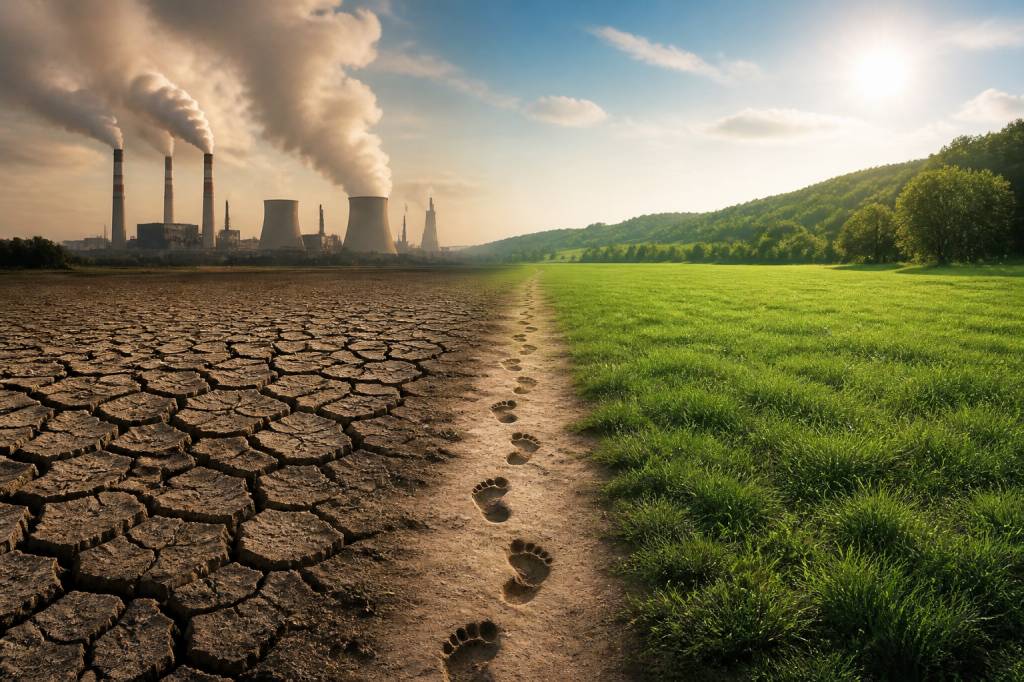
If that sounds abstract, think of your carbon footprint as the climate “shadow” of your choices. You may not see it directly, but it follows everything: the electricity powering your home, the food on your plate, the clothes in your wardrobe, and the way you travel. The good news? Unlike the weather, this is something we can influence.
What exactly makes up a carbon footprint?
A carbon footprint is not just about driving a petrol car or taking a flight. It covers both direct and indirect emissions. Direct emissions come from sources you control more immediately, such as burning gas for heating or using fuel in your car. Indirect emissions happen earlier in the supply chain, often out of sight: the energy used to manufacture your phone, grow your coffee, transport your groceries, or build your furniture.
This distinction matters because many of the biggest emissions are hidden. A t-shirt can carry a surprisingly large footprint if it is made from resource-intensive materials, dyed in fossil-fuel-powered factories, shipped across continents, and washed repeatedly at high temperatures. Likewise, a simple lunch can have very different climate impacts depending on whether it is plant-based or heavy in beef and dairy.
In climate science, footprints are often grouped into scopes:
- Scope 1: Direct emissions from sources you own or control, like fuel burned in a car or boiler.
- Scope 2: Indirect emissions from purchased energy, such as electricity or district heating.
- Scope 3: All other indirect emissions across the value chain, including supply, use, and disposal.
For most individuals, Scope 3 is where the biggest footprint lives. That is the uncomfortable part, but also the useful one: the largest gains often come from changing the systems and habits around us, not from obsessing over small daily sacrifices.
Why carbon footprints matter
The climate crisis is not caused by a single habit or a single sector. It is the cumulative result of billions of decisions and the infrastructure that supports them. Carbon footprints help us identify where emissions are concentrated and where action will have the greatest impact.
For policymakers and companies, footprint data can reveal which processes need redesigning. For individuals, it can highlight the biggest lifestyle levers. Most people are surprised to learn that a few areas usually dominate their personal emissions:
- Home energy use
- Transport, especially car use and flying
- Diet, particularly high consumption of animal products
- Consumption of goods and services
The point is not to turn climate action into a purity test. It is to focus effort where it counts. Replacing one disposable habit with a low-carbon alternative may not make headlines, but repeated across millions of households, it becomes meaningful very quickly.
How to measure your carbon footprint
Measuring a carbon footprint does not require a PhD in life-cycle analysis, though that certainly helps. There are many calculators available online that estimate emissions based on energy bills, travel patterns, diet, and purchasing habits. These tools are useful for spotting major sources, but they are only estimates. The exact number depends on assumptions, local energy grids, and consumption patterns.
If you want a practical approach, start with the big categories:
- Home: What type of heating do you use? How efficient is your home? What is your electricity mix?
- Transport: How often do you drive? Do you fly? Could any trips be made by train, bike, or public transit?
- Food: How often do you eat beef, lamb, dairy, and processed food? How much food do you waste?
- Stuff: How often do you buy new clothes, electronics, and household goods?
Sometimes the result is a wake-up call. Someone may think their footprint is “mostly fine” because they recycle religiously, only to discover that frequent flights dwarf everything else. Another person may discover that improving home insulation could reduce both emissions and energy bills. Climate action is rarely glamorous, but it is often surprisingly practical.
The biggest ways to reduce your carbon footprint at home
Home energy is one of the easiest places to make measurable progress. If your home leaks heat in winter or overcools in summer, you are paying for energy that immediately escapes into the atmosphere. A house with better insulation and efficient systems is good for the climate and good for your budget. Rare win-win territory. Enjoy it while it lasts.
Here are high-impact steps:
- Improve insulation: Loft insulation, wall insulation, draught-proofing, and double glazing can significantly cut heating demand.
- Use a smart thermostat: Better control of heating schedules can reduce waste without reducing comfort.
- Switch to a renewable electricity tariff: This is not a magic wand, but it does support cleaner grids and can lower your operational emissions.
- Choose efficient appliances: Look for energy labels and replace very old appliances when it makes sense economically and practically.
- Reduce hot water use: Shorter showers, lower-temperature washing, and fixing leaks all help.
If you can access deeper changes, heat pumps are among the most effective upgrades for many homes. They use electricity to move heat rather than generate it by burning fuel, which can dramatically lower emissions. Solar panels can also be a powerful step, especially when paired with energy efficiency measures. The key is sequencing: reduce demand first, then decarbonize the energy you still need.
Transport: where small changes can have a big climate effect
Transport emissions are often dominated by two habits: driving alone in inefficient vehicles and flying. A car used for short solo trips has a much higher carbon cost per passenger than a bus, train, bike, or walk. And flights, especially frequent short-haul flights, add up quickly.
Reducing transport emissions does not mean never travelling again. It means being more selective and more efficient.
- Walk, cycle, or use public transport for short trips: This is the lowest-carbon option and often the healthiest too.
- Car-share when driving is necessary: Sharing seats lowers emissions per person and can cut costs.
- Choose rail over air where possible: For many routes, trains are dramatically lower in emissions.
- Drive less, not just cleaner: Even an electric car still has manufacturing emissions and requires energy. If you can avoid trips, that’s even better.
- Fly less often: One long-haul flight can outweigh months of lower-impact daily choices.
There is a useful mental trick here: ask not “Can I make this trip?” but “Is this trip necessary, and is there a lower-carbon way to do it?” That one question can change a surprising number of decisions.
Food choices and the carbon footprint on your plate
Food is one of the most personal areas of climate action because everyone eats, and everyone has preferences. The goal is not to impose a perfect diet. It is to understand which foods carry the highest emissions and make informed swaps.
In general, ruminant meats like beef and lamb have the highest footprints because of methane emissions and land use. Dairy also contributes significantly. Plant-based foods such as beans, lentils, grains, vegetables, and seasonal fruit tend to have much lower emissions.
A climate-friendly diet does not need to be extreme. Even reducing meat consumption a few times per week can have a meaningful impact. A few practical moves:
- Eat more plant-based meals: Start with one or two each week and build from there.
- Cut food waste: Plan meals, use leftovers, and understand date labels.
- Choose seasonal produce: Seasonal foods often require less energy-intensive growing and transport.
- Reduce highly processed waste: Buying only what you actually use avoids unnecessary emissions from production and disposal.
- Support local systems where appropriate: Local does not automatically mean low-carbon, but it can help when combined with seasonal production and efficient logistics.
Food waste deserves special attention. When edible food ends up in landfills, all the emissions from growing, processing, and transporting it were effectively for nothing. That is a climate double-loss: wasted resources plus methane from decomposition. Cooking with leftovers may not sound revolutionary, but it is one of the simplest mitigation strategies available.
What you buy matters more than you think
Every product has a footprint, even if that footprint is invisible on the shelf. Clothing, electronics, furniture, cosmetics, packaging, and household items all require raw materials, manufacturing energy, transport, and waste management. The most sustainable product is often the one you do not buy at all.
That does not mean abandoning all consumer goods. It means buying less, buying better, and extending the life of what you already own.
- Choose durable products: A longer-lasting item usually has a lower footprint over time.
- Repair before replacing: A repaired jacket or phone is almost always better than a new one.
- Buy second-hand: Especially for clothing, furniture, books, and some electronics.
- Avoid fast fashion: Cheap, rapidly replaced clothing is a high-footprint habit disguised as convenience.
- Use what you have: This may be the least exciting advice and the most effective.
There is also a hidden climate benefit to fewer purchases: lower demand can push brands to design more durable, repairable products. Consumer choices are not the whole solution, but they do signal what kind of market we want to support.
Digital life has a footprint too
It is easy to forget that digital activities run on physical infrastructure: servers, data centers, networks, and devices. Streaming, cloud storage, endless video calls, and constant device upgrades all carry energy and material costs. No, your inbox is not secretly melting glaciers by itself. But scaled across billions of users, digital consumption matters.
Useful habits include:
- Keeping devices longer before replacing them
- Reducing unnecessary cloud storage and duplicate files
- Downloading content for offline use instead of repeated streaming
- Using Wi-Fi rather than mobile data when possible, as it can be more efficient
- Recycling electronics properly through certified collection systems
This is not about shaming people for watching a documentary online. It is about remembering that convenience has a material footprint. Even in the cloud, emissions are grounded.
How businesses and communities can reduce footprints faster
Individuals matter, but systems matter more. The fastest cuts in carbon footprints often come from collective action: better buildings, cleaner grids, transit systems, circular product design, and stronger regulations. Businesses can accelerate this transition by measuring emissions across their value chains and setting credible reduction targets.
For organizations, the most effective actions often include:
- Switching to renewable electricity
- Improving building efficiency
- Reducing business travel and encouraging rail over air
- Redesigning products for repair and reuse
- Working with suppliers to lower Scope 3 emissions
Communities can also make low-carbon living more accessible by improving public transport, expanding bike lanes, supporting local food systems, and making energy-efficient housing more affordable. In other words, the best carbon footprint strategy is not just personal discipline. It is building a world where low-carbon choices are the easy choices.
Where to start if you want real change
The most effective reductions usually come from the biggest categories first. If you want to make progress without getting lost in details, focus on the following order:
- Reduce home energy use through insulation and efficiency
- Drive less and fly less
- Eat more plant-based meals and waste less food
- Buy fewer, longer-lasting products
- Choose cleaner energy where available
That approach works because it targets structural emissions, not just symbolic gestures. Composting is useful. So is switching off lights. But if the goal is meaningful climate impact, the larger levers should get priority.
Carbon footprints can feel overwhelming at first because they reveal how deeply emissions are woven into modern life. But that same insight is empowering. Once you know where emissions come from, you can make smarter choices, support better policies, and push for systems that make sustainable living easier for everyone.
The climate challenge is big, yes. But so is the toolbox. And unlike the problem, the toolbox keeps getting better.