What a carbon footprint actually means
You’ve probably heard the term carbon footprint everywhere: on product labels, in climate reports, in corporate pledges, and in conversations about “going green.” But what does it really mean?
In simple terms, a carbon footprint is the total amount of greenhouse gases released directly and indirectly by a person, product, company, event, or activity. It is usually measured in carbon dioxide equivalent or CO2e, a unit that allows us to compare different greenhouse gases based on their warming effect.
That matters because climate change is not caused by carbon dioxide alone. Methane, nitrous oxide, and other gases also trap heat in the atmosphere. So when we talk about a carbon footprint, we are really talking about the climate impact of almost everything we do.
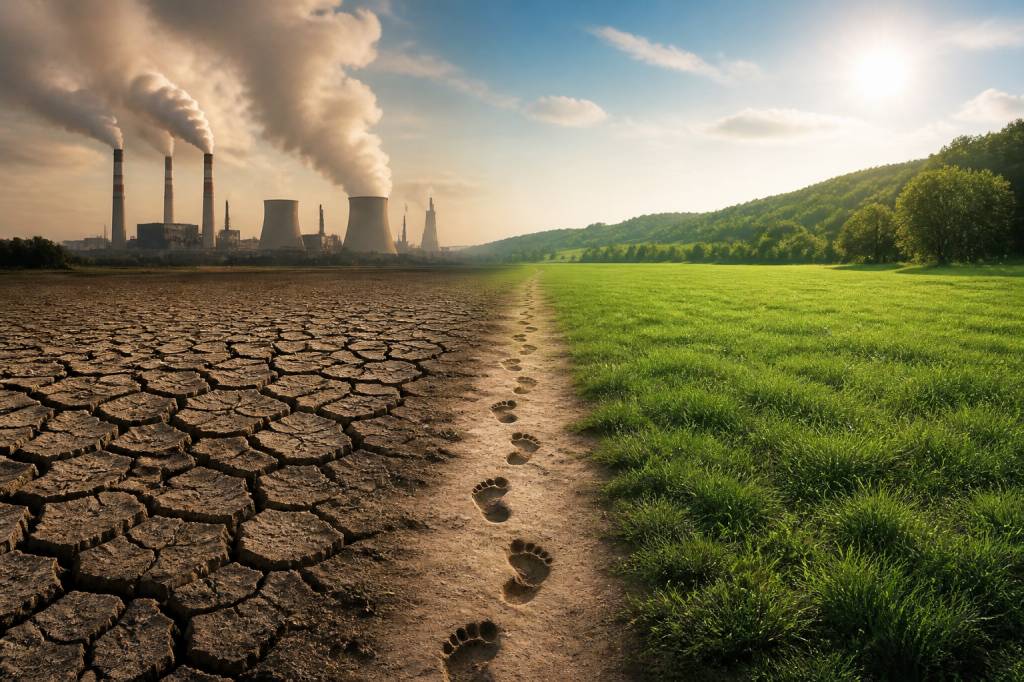
Think of it as the invisible trail left behind by our daily choices: the food on our plate, the electricity powering our homes, the clothes we buy, the flights we take, and even the servers that keep our favorite websites running. Not exactly glamorous, but very real.
Why CO2e is used instead of just carbon dioxide
The phrase “carbon footprint” can be a little misleading because it suggests only carbon dioxide is involved. In reality, greenhouse gases vary in how strongly they warm the planet and how long they remain in the atmosphere.
CO2e solves this by converting the impact of each gas into a common scale. For example:
- Carbon dioxide (CO2) comes mainly from burning fossil fuels like coal, oil, and gas.
- Methane (CH4) is released from livestock, landfills, and natural gas systems, and is far more potent than CO2 over a shorter time frame.
- Nitrous oxide (N2O) is linked to fertilizers and industrial processes and has a strong warming effect.
This is why a carbon footprint assessment can capture the real climate cost of a product or activity far better than CO2 alone. A beef burger, for example, may carry a much higher footprint than a bean burger not because of one single factor, but because of feed production, land use, methane emissions, processing, and transport all adding up.
Where a carbon footprint comes from
Every footprint has two broad sources: direct emissions and indirect emissions.
Direct emissions come from sources you control more immediately, such as:
- Driving a petrol or diesel car
- Heating a home with gas or oil
- Using fuel in industrial equipment or generators
Indirect emissions are embedded in what you buy and use. They include:
- The emissions from producing and transporting food, clothes, electronics, and furniture
- The electricity used to power your devices
- The footprint of services like cloud storage, streaming, and delivery logistics
This indirect side is where many people are surprised. A product may look “small” on the shelf, but its footprint can stretch across continents. A T-shirt, for instance, might involve cotton cultivation, dyeing, factory energy use, shipping, retail operations, and finally washing and drying after purchase. That’s a long chain for a simple piece of fabric.
How carbon footprints are measured
Measuring a carbon footprint is part science, part accounting. Researchers and organizations use data on energy use, transport distances, material extraction, manufacturing, waste, and more. The result is an estimate of the emissions associated with a given item, service, or lifestyle.
For individuals, footprint calculators usually ask about categories like housing, transport, food, and consumption. For companies, the process is more complex and often follows greenhouse gas accounting frameworks that separate emissions into different scopes.
These scopes help clarify responsibility:
- Scope 1: direct emissions from owned or controlled sources
- Scope 2: emissions from purchased electricity, heating, or cooling
- Scope 3: all other indirect emissions in the value chain, from raw materials to product use and disposal
Scope 3 is usually the largest and hardest to track, especially for sectors like fashion, food, electronics, and travel. It is also where some of the most meaningful reductions can happen. If a brand is serious about climate action, it cannot stop at switching office lights to LEDs and calling it a day.
Why your carbon footprint matters
Your footprint matters for two reasons: it reflects your personal impact, and it reveals where the system around you is shaping that impact.
On the personal level, carbon footprint awareness helps people make informed choices. If you know that flying frequently, driving alone in a large vehicle, or wasting food carries a higher climate cost, you can prioritize changes that actually move the needle.
On the broader level, carbon footprints expose structural problems. A person living in a walkable city with efficient public transit will naturally have a different footprint than someone dependent on long commutes and gas heating. In other words, choices matter, but so do the options available.
That distinction is important. Climate action is not about guilt. It is about understanding where emissions come from so we can cut them intelligently.
The biggest footprint drivers in everyday life
Some decisions have a much larger climate effect than others. If you want to focus on the highest-impact areas, these are usually the heavy hitters.
Transport is often one of the biggest sources, especially air travel and private car use. A short-haul flight can emit far more per passenger than a train journey. If you’ve ever watched a plane taxi past while your own train glides quietly through the station, the contrast says a lot without needing a spreadsheet.
Food also plays a major role. Beef and lamb generally have much higher emissions than plant-based foods because of methane from livestock, feed production, land use, and energy input. That does not mean perfection is required. It means shifting even a few meals a week toward plant-rich options can make a measurable difference.
Home energy is another major category. Heating and cooling are often the largest energy uses in a household. Improving insulation, using a heat pump, or switching to renewable electricity can significantly reduce emissions over time.
Consumption is the quiet giant. Fast fashion, frequent gadget upgrades, and impulse buying all carry hidden emissions. When something is produced, packaged, shipped, and eventually discarded, the footprint is already locked in before it even reaches your closet or shelf.
Carbon footprint vs ecological footprint
People often use “carbon footprint” and “ecological footprint” interchangeably, but they are not the same.
A carbon footprint focuses specifically on greenhouse gas emissions. An ecological footprint is broader: it measures the amount of biologically productive land and water required to support a lifestyle or population, including food, materials, waste absorption, and more.
Both are useful, but carbon footprint is the more common metric in climate discussions because it directly relates to global warming. If the goal is to understand how an action affects the atmosphere, CO2e is the right tool.
What a carbon footprint does not tell you
Carbon footprints are useful, but they are not perfect. Like any metric, they simplify reality.
First, they do not capture every environmental issue. A product may have a low carbon footprint but still cause high water use, toxic pollution, or biodiversity loss. A “climate-friendly” label should not distract us from the rest of the environmental picture.
Second, footprint calculations depend on assumptions and data quality. Different methods can produce different estimates, especially when supply chains are complex. That is why transparency matters. A company should show how it calculated its claims instead of hiding behind vague green messaging and a leaf logo.
Third, a footprint tells us about emissions, not fairness. Two households may have the same footprint but vastly different incomes, access to infrastructure, or responsibilities. Climate solutions need to be both effective and just.
How to reduce a carbon footprint without turning life into a spreadsheet
The good news: you do not need to live like a monk to lower your footprint. In fact, some of the most effective actions are surprisingly practical.
If you are looking for places to start, focus on the highest-impact shifts first:
- Travel less by plane, especially for trips that can be done by train or not at all
- Drive less by walking, cycling, carpooling, or using public transport
- Improve home efficiency with insulation, smart thermostats, and efficient appliances
- Switch to renewable electricity if available in your area
- Eat more plant-based meals and reduce food waste
- Buy less, buy better by choosing durable, repairable products
- Keep electronics longer instead of upgrading at every release
One of the simplest and most underrated strategies is to reduce waste. Food waste is especially important because it represents emissions from production, transport, storage, and disposal all for something that never got eaten. In climate terms, that is the definition of a bad deal.
Another practical shift is to focus on longevity. A jacket worn for ten years has a very different footprint than one replaced every season. The same logic applies to phones, furniture, and tools. “Buy once, use often” is not just a lifestyle slogan; it is a climate strategy.
Why carbon footprint information is useful for businesses
For companies, understanding carbon footprints is not just about public image. It is a way to identify inefficiencies, reduce risk, and prepare for regulation and consumer expectations.
A product footprint can reveal where emissions are concentrated: raw materials, manufacturing, packaging, transport, use phase, or end-of-life. Once companies know where the biggest impacts are, they can act with precision rather than making cosmetic changes.
For example:
- A clothing brand might redesign products for durability and repairability
- A food company might source ingredients from lower-emission suppliers
- A logistics business might optimize routes and transition to electric vehicles
- A tech firm might reduce server energy use and improve data center efficiency
That is where carbon footprinting becomes more than reporting. It becomes a decision-making tool. And in a transition economy, that kind of data is worth its weight in sunlight.
Common misunderstandings about carbon footprints
A few myths tend to follow the term around.
Myth: Carbon footprints are only about personal behavior.
Reality: individual choices matter, but systems matter too. Energy grids, transport networks, food systems, and industrial supply chains shape most emissions.
Myth: Small actions don’t count.
Reality: small actions are useful when they build habits, influence markets, and support bigger structural change. No one recyclable cup is saving the planet, but scaled behavior change can shift demand and norms.
Myth: If something is local, it must be low-carbon.
Reality: local can be better, but not always. A local product made in an energy-intensive or wasteful way may still have a high footprint. The full lifecycle matters.
Myth: Carbon footprint labels are always accurate.
Reality: labels can be helpful, but you should look for methodology, transparency, and independent verification when possible.
A practical way to think about carbon footprints
If the term feels abstract, here is a simple way to use it: treat carbon footprint as a filter for better decisions.
Before buying, ask:
- Do I need this?
- How long will it last?
- Can I repair, reuse, rent, or borrow instead?
- What is the main footprint driver: transport, materials, energy, or waste?
- Is there a lower-carbon alternative that still works for me?
This approach is more useful than chasing perfection. You do not need to calculate emissions for every spoonful of yogurt or every email you send. Start with the decisions that repeat often or carry a large impact. That is where the biggest gains usually live.
Why understanding your footprint is a form of climate literacy
At its core, learning about carbon footprints is about climate literacy. It helps people connect everyday life to global emissions in a way that is concrete and actionable.
That connection matters because climate change can feel distant until it shows up in heatwaves, floods, wildfire smoke, or rising insurance costs. Understanding footprints gives shape to an invisible problem. It turns a vague concern into something measurable, discussable, and changeable.
And once something is measurable, it becomes harder to ignore.
That is why the carbon footprint definition is more than a dictionary entry. It is a lens for seeing how our homes, cities, diets, purchases, and businesses interact with the climate system. It helps identify the biggest emissions sources, separate noise from impact, and point us toward better choices at both individual and collective levels.
Used well, it is not about blame. It is about clarity. And clarity is where practical climate action begins.